Grants
Landscape Regeneration
Life on the Edge
£10,000 awarded
Project Dates, Year 2: 1.06.25 to 1.06.26
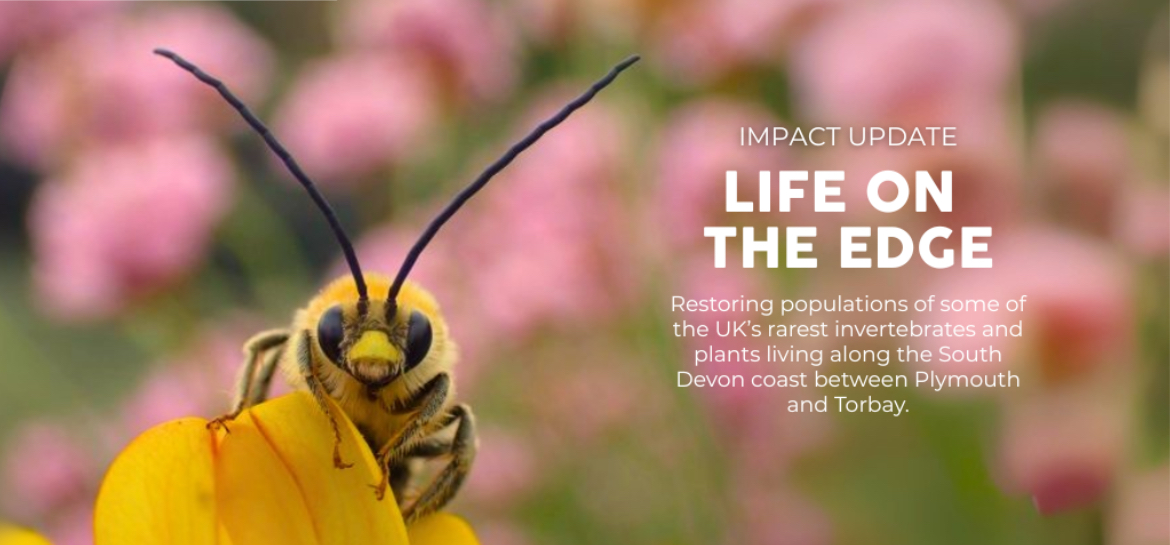
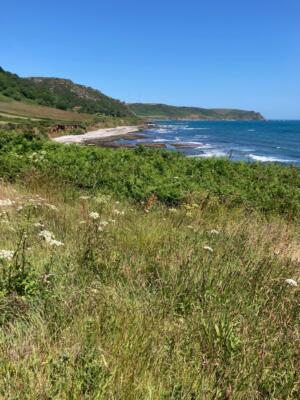
Life on the Edge aims to restore viable populations of some of the UK’s rarest invertebrates and plants living along the South Devon coast between Berry Head and Wembury, including the last known colony of the Six-banded Nomad Bee (Nomada sexfasciata).
A major cause of their decline is habitat loss and degradation, and a lack of habitat connectivity. Many of South Devon’s clifftop wildflower grasslands that provide nectar for bees and butterflies, and a home for oil beetles, have been lost to changes in farming practice coupled with coastal erosion.
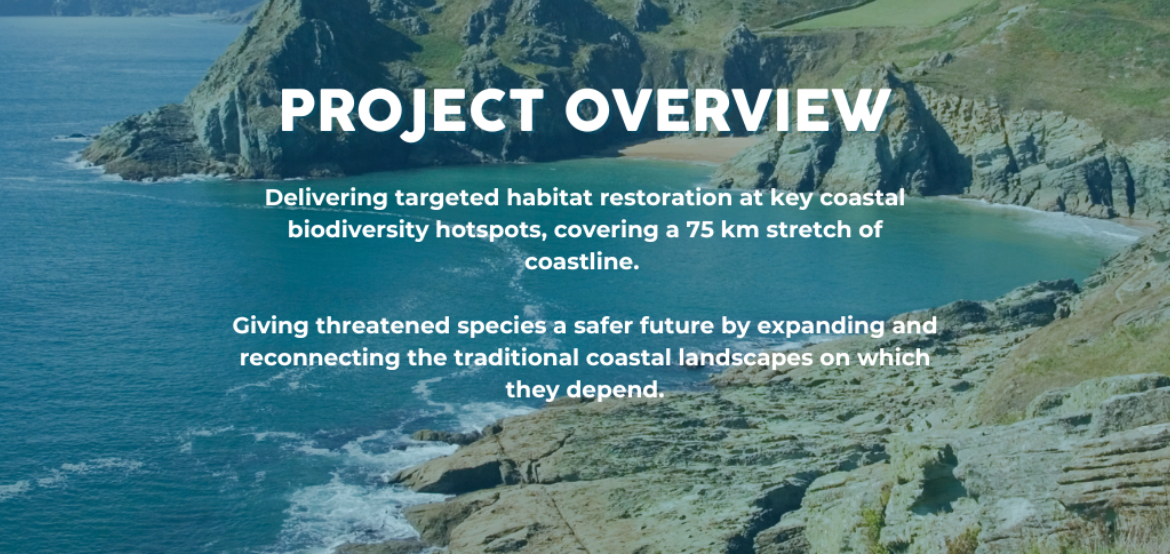
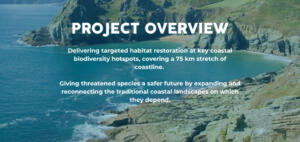
Life on the Edge is a five year project that will deliver targeted habitat restoration and creation at five key coastal biodiversity hotspots, covering a 75km stretch of coastline, to give threatened species a safer long-term future by expanding and reconnecting the traditional coastal landscapes on which they depend.
Landscape-scale change will be achieved by working to link these biodiversity hotspots – restoring high nature value coastal habitats, and connecting them with the South Devon B-lines network. This will support the recovery of threatened species, improve habitat connectivity, and boost the abundance and diversity of wildlife along the coast.
Practical habitat interventions coupled with landowner buy-in and conservation covenants will ensure the habitats are managed for the long term – providing a strong legacy for the project.
If you would like to get involved:
- Join in with one of the project events – see www.southdevon-nl.org.uk/events for details.
- Get together with your neighbours and help make a difference for invertebrates in your community with the support of one of the LotE community and conservation grants.
- Or, contact lote@southdevon-nl.org.uk for more info on how to get involved in one of the projects targeted community engagement programmes.
Life on the Edge is a collaborative project being delivered by Buglife, South Devon National Landscapes, National Trust, and local farmers, landowners, and communities. It is funded primarily by National Lottery Heritage Fund and Devon Environment Foundation.
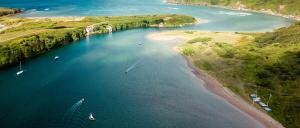
Image credits: Below, Devon Environment Foundation. Title image of Six-banded nomad bee, Buglife.
YEAR 2 IMPACT SUMMARY – JAN 2026
Project Activities:
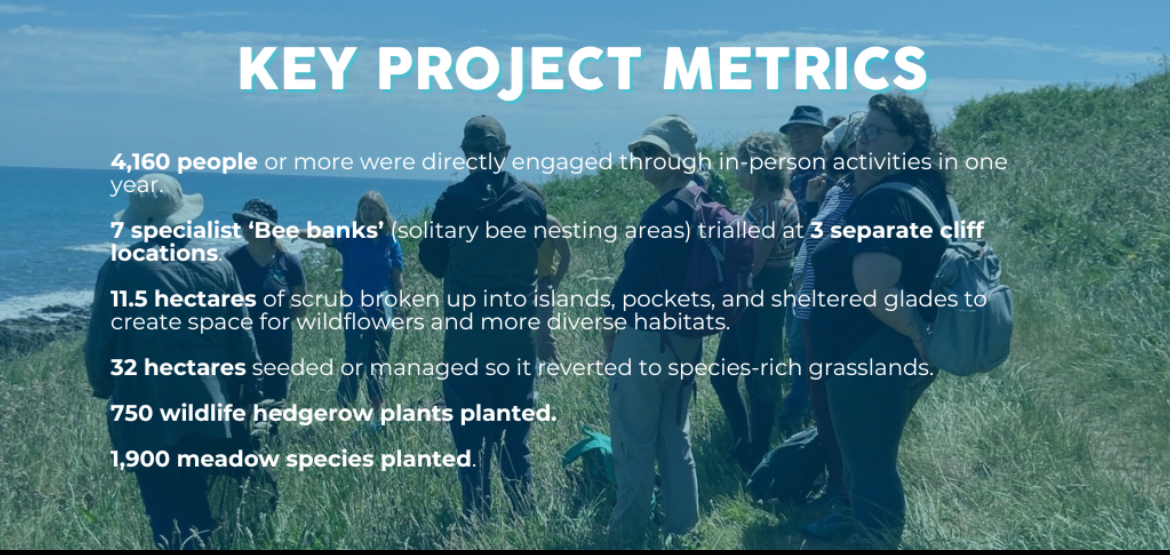
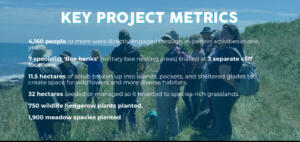
- Plant over 26ha of new donor fields (fields which can be harvested for wildflower rich grassland seed in the future)
- Combined with 5ha planted last year equates to 31ha of Donor Field creation completed
- Through 1 to 1 farm visits the project has supported 16 landowners in positive nature land management changes. Which combined with last year’s efforts results in the project actively influencing land management across over 131ha in South Devon.
- Surveys throughout the year have confirmed the presence of a healthy population of Moon Spiders (Callilepis nocturna) at Prawle Point, which until this point was relatively under-recorded.
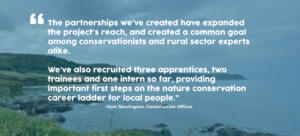
- The first cohort of Apprentices are now nearing the end of their 18mth placements and are working on completing their portfolios to complete their Level 2 Countryside worker apprenticeship.
- Completed our first Parish Pollinator Plan for Holbeton Parish, and we are in the first stages of developing similar plans for other South Devon communities at Malborough, Galmpton and East Portlemouth.
- Work with local communities has included conservation grant applications for the creation of wildflower patches at Wembury Recreation Ground and Modbury.
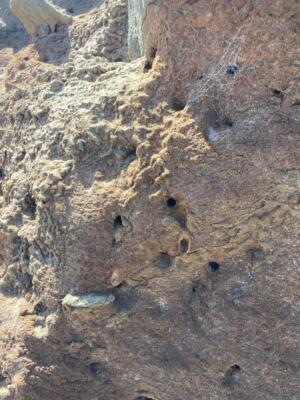
- Monitored Long-horned Bee (Eucera longicornis) populations including the potential identification of a new nest site.
- Discovered a new population of Mediterranean Oil Beetles (Meloe mediterraneus) 15km from the nearest known population. This implies that we have either discovered the third known population of Mediterranean Oil Beetles in the country or that the South Devon population is much larger and more widely spread than previously known.
Project Impacts:
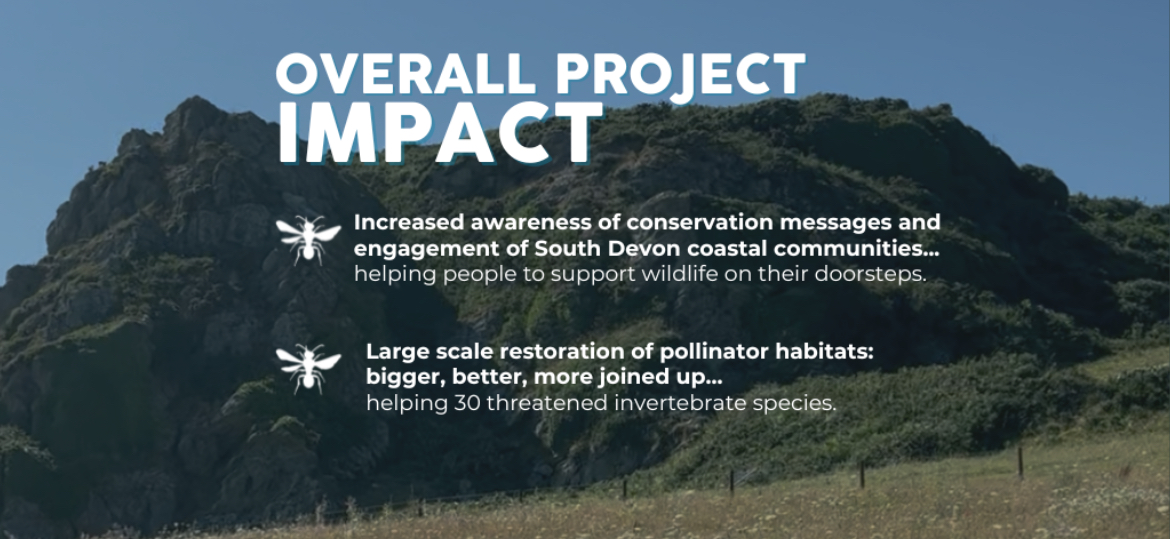
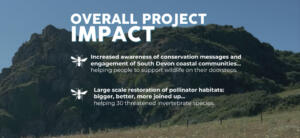
- Through various practical activities, communications, and partnership working, the project is gaining momentum in raising awareness of core conservation messages and mobilising communities across the South Devon Coastline.
- Individuals and groups have shown keen interest in participating, expanding their knowledge of the local environment, target species, and the natural world more generally, and getting involved in practical conservation.
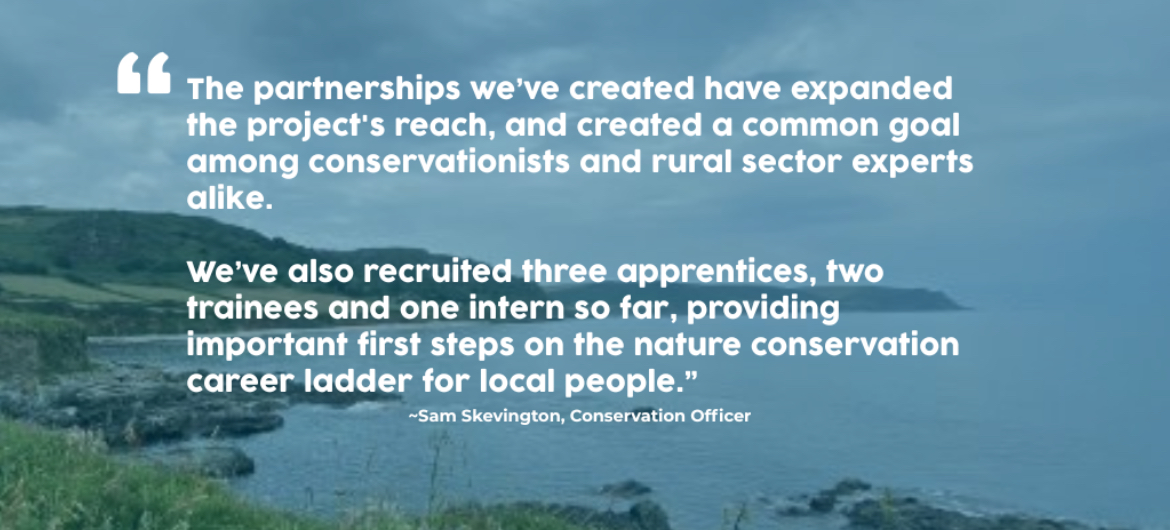
- Partnerships created through the project have expanded the project’s reach into specialist areas, aiding in gathering important data and creating a common goal among nature conservation and rural sector experts across the 100km project area
- One of the project’s main aims to make pollinator habitats bigger, better, and more joined up. Through the habitat restoration activities, the project is working towards this impact outcome.